


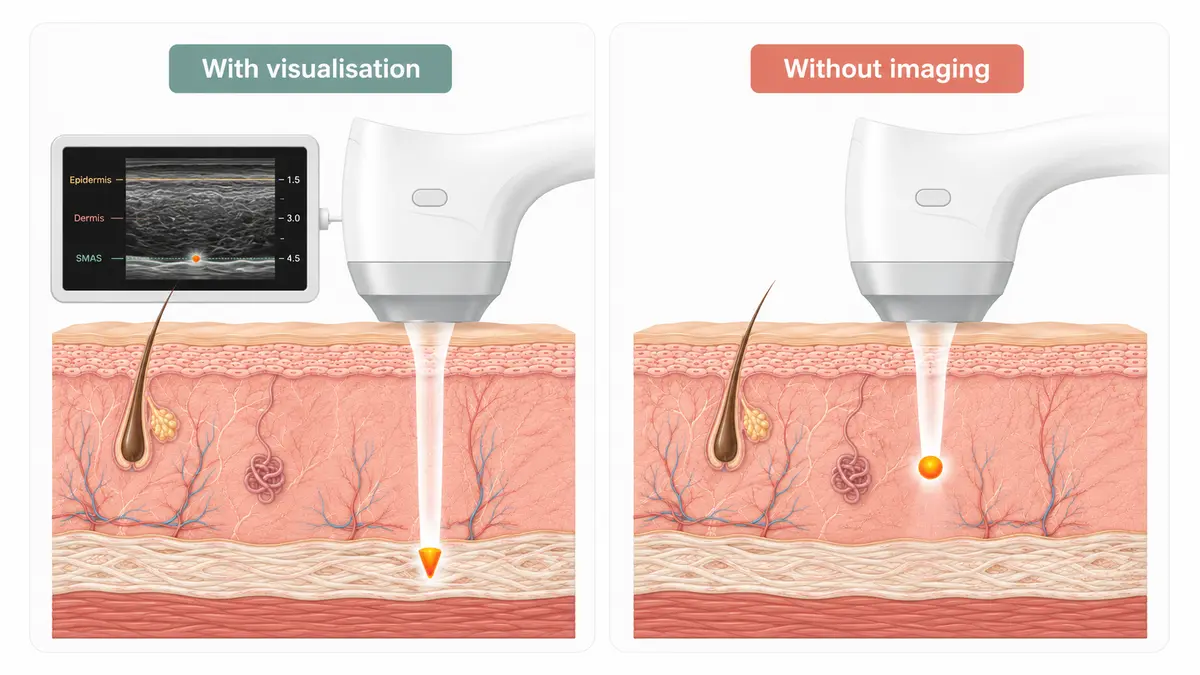
Both Ultherapy and HIFU use ultrasound energy to tighten skin and promote new collagen formation, so one may assume they are the same. While there are various differences, the most significant difference is this: Ultherapy shows the operator the tissue layers as it treats them and provides real-time visualisation, while standard HIFU does not. That single distinction changes the whole treatment, as the doctor can plan and customise each treatment when using Ultherapy for every single patient.
The core difference: visualisation
Ultherapy is a specific device that uses microfocused ultrasound with visualisation, shortened to MFU-V. The visualisation part matters. The handpiece carries an ultrasound imaging function, so the doctor sees the layers of skin and the tissue beneath in real time before energy is delivered. They can confirm the energy lands in the intended layer rather than in fat, bone, or the wrong depth.
HIFU, high-intensity focused ultrasound, is the broader family of skin-tightening ultrasound devices. Most aesthetic HIFU machines deliver energy without imaging. The operator works from anatomical landmarks and experience rather than a live picture of the layers, which is why this type of HIFU is sometimes described in clinical writing as a treatment delivered without direct visualisation. Ultherapy sits within the ultrasound category but is set apart by that imaging step.
Put simply, both heat the deeper skin to a temperature that triggers collagen repair, roughly 60 to 70 degrees Celsius. Ultherapy adds a window to watch where that heat goes.
How each one works on the skin
Ultherapy delivers focused ultrasound to three set depths: 1.5mm and 3.0mm in the dermis, and 4.5mm at the superficial muscular aponeurotic system, the SMAS. The SMAS is the same connective layer a surgeon tightens during a facelift, which is why ultrasound at that depth is used for lifting. The energy creates small, controlled zones of heat that the body then repairs by stimulating new collagen over the following weeks and months.
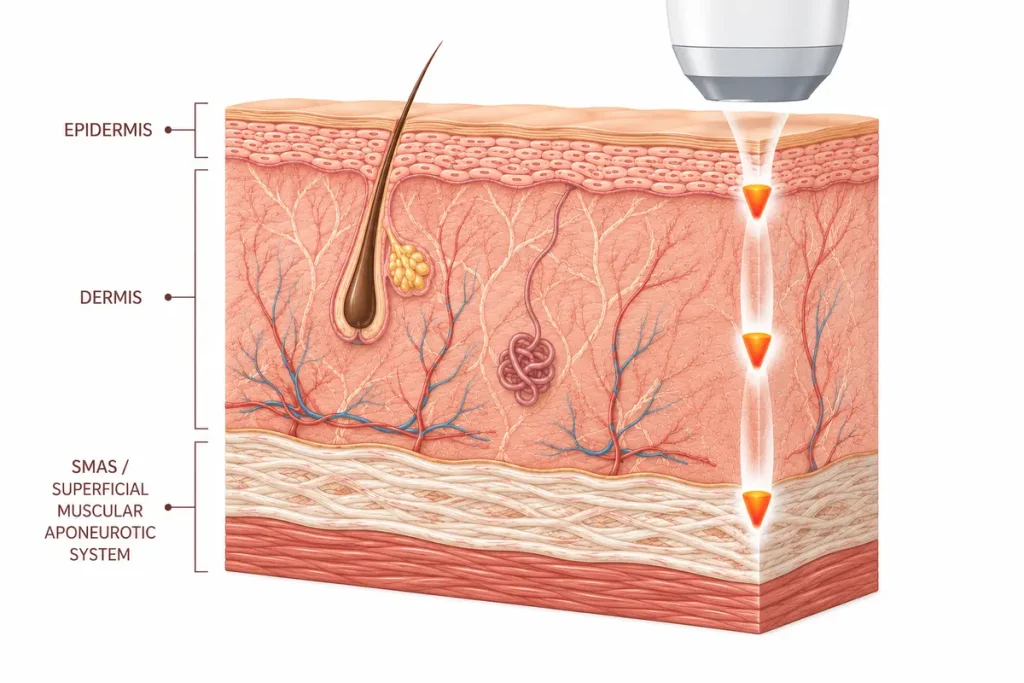
HIFU devices work on the same principle of focused heat at depth, though the exact depths, energy levels, and spacing of those heat zones differ between manufacturers. Because there are many HIFU devices on the market and they are not identical, results and comfort can vary depending on which device a clinic uses and how it is set.
Neither treatment removes skin nor involves cutting. Both rely on your own collagen response, so the change builds gradually rather than appearing on the day of treatment.
What each treatment targets
Ultherapy is FDA-cleared for lifting the brow, lifting loose skin under the chin and on the neck, and improving lines and wrinkles on the décolleté. The PRIME version of the device additionally gained FDA clearance in late 2025 for improving the appearance of skin laxity on the arms and abdomen. A doctor still needs to assess whether you are suited to it based on your skin and the degree of laxity.
HIFU is used across a similar range of facial and neck concerns, and some HIFU protocols are also applied to body areas. The spread is wider partly because the term covers many devices rather than one. If you are considering HIFU, it is worth asking the clinic which specific device they use and what it is cleared for.
Comfort, sessions, and downtime
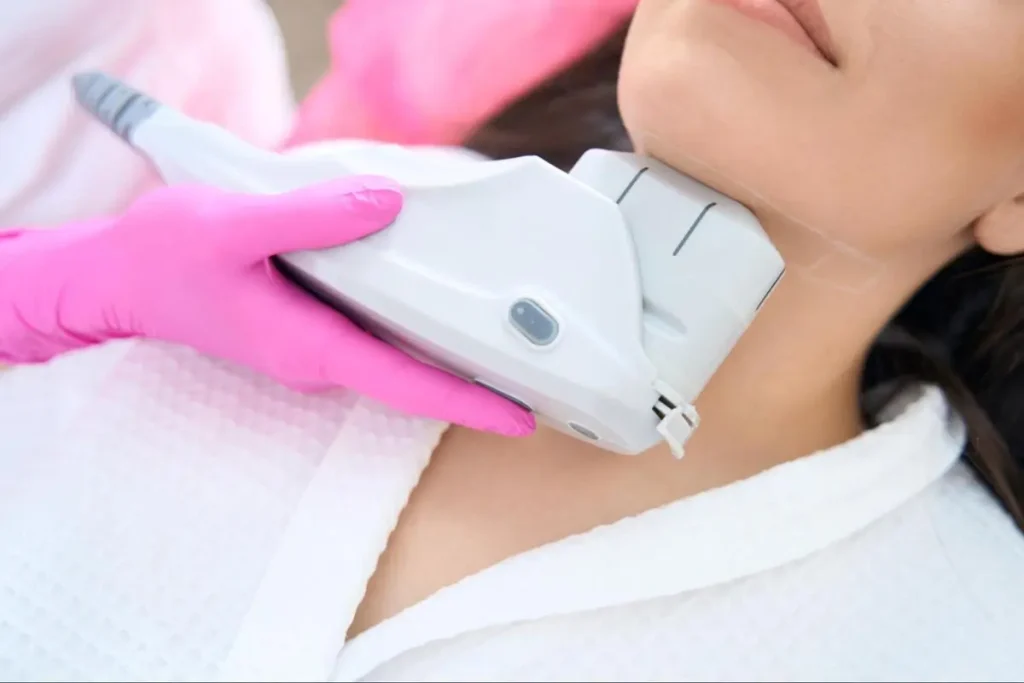
Both treatments are done in the clinic without surgery, and both are usually completed in a single visit, though your doctor may recommend a repeat depending on your skin and goals. Sensation during treatment is often described as brief heat or a prickling feeling deeper in the skin. Comfort measures vary, and this is a reasonable thing to raise during your consultation.
Downtime is minimal for both. Some redness, mild swelling, or tenderness can follow and typically settle within hours to a few days. Because the collagen response is gradual, the visible change develops over the months after treatment rather than straight away. Individual results vary, and no ultrasound treatment replaces what surgery achieves for significant sagging.
Ultherapy and HIFU at a glance
The table below summarises the practical differences. Use it as a starting point for a conversation with a doctor, not as a decision on its own, since the right choice depends on your skin, the area you want treated, and a clinical assessment.
| Ultherapy | HIFU (general) | |
|---|---|---|
| Energy type | Microfocused ultrasound with visualisation (MFU-V) | High-intensity focused ultrasound, no imaging |
| Real-time imaging | Yes, the operator sees the tissue layers being treated | No, energy is delivered without seeing the layers |
| Treatment depths | 1.5mm, 3.0mm, and 4.5mm, down to the SMAS | Varies by device, commonly 1.5mm to 4.5mm |
| Regulatory status | FDA-cleared for face, neck and décolleté; PRIME also for arms and abdomen | Clearance varies between devices and manufacturers, but often no FDA clearance |
| Typical sessions | Usually a single session is required, repeated annually | Often multiple sessions are needed as a treatment course |
| Downtime | Minimal; redness or mild swelling that settles quickly | Minimal; similar short-lived effects |
How to decide between them
The decision is less about which technology is newer and more about matching the treatment to your concern and having it delivered well. A few questions help you compare clinics and options on the same terms:
- Which specific device does the clinic use, and what is it cleared to treat?
- Who performs the treatment, and what are their qualifications?
- What does the doctor expect for your skin, specifically, given your degree of laxity and the area you want treated?
For deeper or more advanced sagging, a doctor may discuss other options or a combination rather than ultrasound alone. The most useful step is an in-person assessment, where a doctor can examine your skin and explain what each approach can and cannot do in your case.
Frequently asked questions
Is Ultherapy a type of HIFU?
Ultherapy uses focused ultrasound, so it belongs to the same broad family, but it is a distinct device that uses MFU-V rather than HIFU. Its defining feature is real-time imaging, which most HIFU devices do not have. Treating them as identical misses the main practical difference.
Which one lasts longer?
Both rely on your own collagen, so longevity depends on your skin, age, and how your body responds rather than on the brand alone. But often, a more precise treatment such as Ultherapy lasts longer than a HIFU treatment. A doctor can give you a realistic sense of what to expect for your skin and when a repeat might be considered.
Does the imaging in Ultherapy actually change the result?
The imaging lets the operator confirm energy is delivered to the intended layer rather than guessing from surface landmarks. Whether that produces a better outcome for you depends on your anatomy and the operator, which is part of why an individual assessment matters.
Can I have either treatment if my skin is very loose?
Ultrasound skin-tightening suits mild to moderate laxity. For significant sagging, the change from any non-surgical ultrasound treatment may be limited, and a doctor may discuss other routes. An honest assessment of how much laxity you have is the starting point.
To find out which approach suits your skin, the next step is a consultation where a doctor can assess your concern in person and talk through the options with you.